
Energy Industry Use Case
When Energy Became an Intelligent Flow
April 28, 2026
Energy has always been more than power generation.
It is the foundation of modern economies, industrial production, mobility, digital infrastructure, public life, and human comfort. Every home, factory, hospital, data center, railway, and city depends on energy moving reliably through invisible networks of assets, contracts, markets, regulations, and decisions.
For decades, energy companies optimized physical infrastructure: power plants, grids, substations, pipelines, meters, storage systems, maintenance programs, trading operations, and customer service centers. Each improvement strengthened reliability and scale.
But the industry has entered a new era.
Energy is no longer a relatively linear system of production, distribution, billing, and service. It has become volatile, decentralized, data-rich, regulation-heavy, sustainability-driven, and deeply interconnected.
- Renewables fluctuate.
- Demand patterns shift.
- Customers become producers.
- Assets age.
- Markets move in real time.
- Regulations evolve.
- Climate events disrupt operations.
- Management must make faster decisions under higher uncertainty.
BlueCallom·AI changes the question.
Not only: How can energy companies become more efficient?
But: What happens when the energy enterprise itself becomes intelligent — able to sense, interpret, coordinate, and adapt across generation, grid operations, field service, customer management, finance, compliance, and executive decision-making?
NOTE: An Enterprise AI implementation unfolds the biggest competitive advantage since the industrial revolution. This is why we cannot expose any details about our customers.
Use Case Focus
Cognitive enterprise intelligence across generation, grid operations, field service, customer management, finance, compliance, and executive decision-making.
Possible Impact
Faster incident interpretation, stronger outage communication, better asset prioritization, reduced reporting effort, improved compliance documentation, and clearer management visibility.
Best Fit
Energy providers, utilities, grid operators, renewable energy companies, infrastructure operators, field service organizations, and energy enterprises with complex operational, regulatory, and customer dependencies.
First Recommended Use Case
AI-powered outage intelligence across grid operations, field service, customer service, compliance, finance, and management.
Transformation Path
Start with one high-value cross-department workflow, prove measurable value, then expand from workflow intelligence to enterprise-wide cognitive energy intelligence.
Current Pressure — Energy in a Time of Systemic Transformation
The energy industry is under pressure from every direction.
On one side, there is the demand for reliability. Energy must be available continuously. Customers expect stable supply, transparent communication, fair pricing, and rapid issue resolution. Industrial clients expect predictability. Governments expect resilience. Society expects sustainability.
On the other side, the operating environment is becoming more complex.
Energy companies must integrate renewable sources, manage distributed generation, modernize grids, maintain aging infrastructure, respond to extreme weather events, comply with regulation, optimize asset investments, control operational costs, and navigate volatile energy markets.
The challenge is not only technical. It is organizational.
- Grid operations see load changes and infrastructure stress.
- Asset management sees maintenance priorities.
- Field service sees real-world equipment conditions.
- Customer service sees complaints, outages, billing issues, and expectations.
- Trading and procurement see market exposure.
- Finance sees cost, revenue, margin, and investment impact.
- Compliance sees regulatory obligations.
- Management sees strategic risk.
- But these views are often fragmented.
A transformer fault may begin as a technical issue. Then it becomes a customer outage issue. Then a field service scheduling issue. Then a regulatory reporting issue. Then a financial exposure issue. Then a management concern.
A renewable generation forecast may begin as a planning signal. Then it affects grid balancing, market purchasing, storage decisions, customer pricing, and sustainability reporting.
Energy is one of the most interconnected industries in the world. Yet many energy enterprises still manage that interconnection through departments, systems, dashboards, escalation chains, and meetings.
The system is physical. The challenge is cognitive.
Optional visual for section 1
Section Info Box
Add a KPI, note, quote, diagram explanation, or section-specific takeaway.
Current Pressure — Energy in a Time of Systemic Transformation
Productivity Ceiling — Why Traditional Digitalization Is No Longer Enough
Energy companies have invested heavily in digital systems.
They use grid management platforms, asset management systems, SCADA environments, ERP, CRM, billing platforms, outage management systems, field service tools, market trading systems, forecasting models, compliance reporting systems, data lakes, dashboards, and analytics.
These tools are essential. They created transparency, control, and operational discipline.
But they also created a new ceiling.
Traditional digitalization often improves visibility without creating integrated intelligence. It shows what happened, where something changed, which asset failed, which customer called, which market price moved, or which compliance requirement applies.
But the human organization still has to connect the meaning.
- People compare system views.
- People interpret alarms.
- People prepare reports.
- People coordinate departments.
- People escalate decisions.
- People translate technical facts into customer impact.
- People translate operational problems into management priorities.
- This is where productivity becomes limited.
- The company may have data, but not shared interpretation.
- It may have systems, but not enterprise cognition.
- It may have automation, but not coordinated intelligence.
The next leap in productivity will not come from another isolated dashboard. It will come from maximizing AI utilization across the enterprise, so that intelligence can move through the organization as naturally as energy moves through the grid.
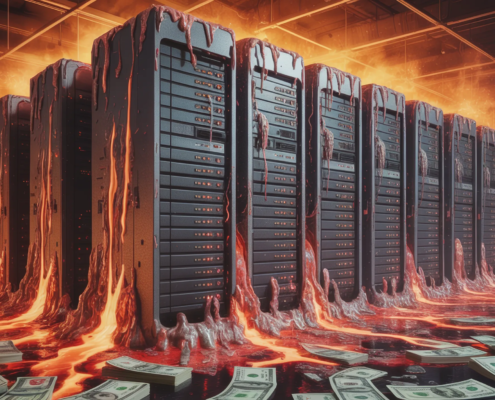
Energy companies invested heavily in digital systems for visibility and control, but hit a productivity ceiling. These tools show what happened, yet humans must still connect meanings, interpret data, and coordinate. The next leap comes from enterprise-wide AI that delivers shared intelligence and coordinated cognition.
Enterprise AI Potential — From Digital Control to Enterprise Workflow Intelligence
Enterprise AI introduces a new layer above existing systems.
It can understand context, interpret weak signals, detect patterns, generate recommendations, coordinate workflows, prepare decisions, and support human experts across functions. In energy, this is especially powerful because every operational signal has multiple meanings.
A load imbalance is not only a grid event. It may become a market decision, a storage decision, a customer impact, a regulatory issue, or an investment signal.
An asset failure is not only a maintenance event. It may affect outage duration, customer satisfaction, safety risk, compliance exposure, field service capacity, and capital planning.
A spike in customer complaints is not only a service issue. It may reveal billing anomalies, outage communication gaps, tariff confusion, or trust erosion.
BlueCallom·AI can act as the intelligence layer that helps connect these meanings. It does not replace existing systems. It helps the enterprise understand what those systems are already trying to say.
This use case does not go deeply into the full BlueCallom product portfolio. That is intentional. The real heavy lifting is performed by the industry-independent BlueCallom Enterprise AI Platform, which provides the intelligent foundation for connected workflows, agents, and business applications.
Which applications matter most depends on the individual energy company: its generation mix, grid architecture, customer base, regulatory environment, asset maturity, market exposure, data landscape, and management priorities. In energy, the journey may begin with outage intelligence, asset maintenance coordination, renewable forecasting workflows, customer communication, compliance reporting, field service optimization, or investment prioritization.
The broader opportunity is to expand AI utilization step by step across the enterprise — until isolated departmental improvements become one Cognitive Energy Enterprise.
Optional visual for section 3
Section Info Box
Add a KPI, note, quote, diagram explanation, or section-specific takeaway.
Enterprise AI Potential — From Digital Control to Enterprise Workflow Intelligence
Industry Application — What BlueCallom·AI Could Do for Energy
Imagine an energy company managing generation assets, grid infrastructure, renewable inputs, storage capacity, field teams, customers, market positions, regulatory obligations, and long-term investment plans.
Every day, the enterprise receives signals.
- A wind forecast changes.
- Solar generation drops unexpectedly.
- A transformer shows abnormal behavior.
- A customer cluster reports outages.
- A field crew finds infrastructure damage.
- Market prices move sharply.
- A regulation requires new reporting.
- A billing anomaly triggers customer complaints.
- A heatwave increases demand.
- A storm approaches a critical service area.
Today, these signals may enter different systems and different departments. Each team sees part of the truth.
With BlueCallom·AI, these signals can become part of one intelligent workflow environment.
The platform could detect that a weather event may reduce renewable generation, increase demand, stress grid capacity, require market purchases, affect vulnerable customer groups, and trigger regulatory reporting duties.
- It could prepare operational recommendations.
- It could summarize risk for management.
- It could coordinate field service readiness.
- It could generate customer communication drafts.
- It could alert finance to market exposure.
- It could support compliance documentation.
- It could help prioritize asset interventions.
This is not AI as a side tool. It is enterprise intelligence applied to the energy system itself.
The company no longer waits for departments to discover the same event from different angles. It begins to understand the full consequences of change as it happens.
Optional visual for section 4
Section Info Box
Add a KPI, note, quote, diagram explanation, or section-specific takeaway.
Industry Application — What BlueCallom·AI Could Do for Energy
Cognitive Enterprise Integration — From Operational Silos to Shared Energy Intelligence
The energy industry already understands networks physically.
- Generation connects to transmission.
- Transmission connects to distribution.
- Distribution connects to customers.
- Customers connect to demand.
- Demand connects to markets.
- Markets connect to investment.
- Investment connects to strategy.
But internally, many organizations still operate in silos. Grid operations may not immediately see financial impact. Finance may not understand operational causality early enough. Customer service may not receive sufficient context during outages. Compliance may depend on manual documentation. Field service may not know which work order carries the highest enterprise priority. Management may receive information after the decisive moment has passed.
BlueCallom·AI helps create a shared intelligence layer across the enterprise. Operations understand customer and regulatory impact. Customer service understands technical reality. Finance understands operational consequences. Field service understands business priority. Compliance understands workflow evidence. Management understands the enterprise in motion.
This is the Cognitive Energy Enterprise.
It does not mean replacing human expertise. Energy is too critical, too regulated, and too complex for simplistic automation. The human role remains central.
But humans are no longer forced to carry the entire burden of interpretation and coordination manually.
The enterprise helps them see earlier, decide faster, and act with greater coherence.
Optional visual for section 5
Section Info Box
Add a KPI, note, quote, diagram explanation, or section-specific takeaway.
Cognitive Enterprise Integration — From Operational Silos to Shared Energy Intelligence
Departmental Empowerment — How Each Function Benefits
Grid Operations
Grid operations gain a broader field of intelligence.
BlueCallom·AI can help interpret grid events in relation to demand forecasts, renewable volatility, asset conditions, customer impact, and field service capacity. Instead of treating events as isolated technical signals, the system helps show which events matter most and why.
Operators receive not only alerts, but context.
This supports faster prioritization, better coordination, and stronger operational resilience.
Generation and Renewable Management
Generation teams benefit from more adaptive planning.
Renewable production depends on weather, asset availability, storage capacity, and market conditions. BlueCallom·AI can help connect generation forecasts with demand expectations, grid constraints, storage decisions, and commercial implications.
The result is not just better forecasting.
It is better enterprise coordination around changing generation reality.
Asset Management and Maintenance
Asset management becomes more predictive and business-aware.
A maintenance signal becomes more valuable when it is connected to outage risk, customer dependency, safety relevance, field crew availability, replacement cost, and long-term capital planning.
BlueCallom·AI can help prioritize maintenance actions based not only on technical condition, but also on enterprise consequence.
Maintenance moves from repair scheduling to asset intelligence.
Field Service
Field teams benefit from clearer priorities and better preparation.
BlueCallom·AI can help assemble relevant context before a crew is dispatched: asset history, customer impact, safety instructions, parts availability, access constraints, weather conditions, and urgency level.
This reduces avoidable back-and-forth and improves field productivity.
Field service becomes less reactive and more intelligently orchestrated.
Customer Service
Customer service changes from call handling to trust management.
During outages, billing disputes, service interruptions, or tariff changes, customers need clarity. BlueCallom·AI can help generate accurate, context-aware communication based on operational reality.
Instead of generic answers, service teams can explain what is happening, what is being done, and what customers can expect next.
This protects trust at the moments when trust is most fragile.
Compliance and Regulatory Affairs
Compliance becomes less dependent on manual reconstruction.
Energy companies must document decisions, incidents, service levels, safety procedures, sustainability metrics, and regulatory obligations. BlueCallom·AI can help gather workflow evidence, summarize actions, prepare reporting drafts, and identify missing documentation.
This reduces administrative burden and strengthens governance.
Compliance becomes embedded in the workflow rather than added after the fact.
Finance and Controlling
Finance gains a clearer view of operational economics.
Market purchases, outage costs, maintenance priorities, capital investments, regulatory penalties, customer compensation, and asset utilization all shape financial performance.
BlueCallom·AI can help finance understand the operational causes behind financial outcomes while decisions are still possible.
Finance moves from historical accounting to real-time business interpretation.
Strategy and Investment Planning
Energy investment decisions are long-term and capital-intensive.
BlueCallom·AI can help connect asset performance, customer demand, regulatory trends, sustainability targets, grid modernization needs, and financial constraints into clearer strategic scenarios.
This supports better prioritization of infrastructure investment, renewable expansion, storage capacity, digital modernization, and resilience programs.
Strategy becomes more evidence-rich and adaptive.
Executive Management
Management gains enterprise-level intelligence.
Leaders do not need only dashboards. They need explanations. They need to know which operational issues carry strategic consequences, where productivity is lost, where AI utilization creates measurable value, and where the organization should focus next.
BlueCallom·AI supports a management view that connects reliability, cost, sustainability, customer trust, regulatory exposure, and investment priorities.
The executive role shifts from reviewing fragmented reports to steering a more intelligent enterprise.
Optional visual for section 6
Section Info Box
Add a KPI, note, quote, diagram explanation, or section-specific takeaway.
Departmental Empowerment — How Each Function Benefits
Management Rationalization — Why the Investment Makes Business Sense
For energy leaders, the case for BlueCallom·AI should be framed around productivity, resilience, risk reduction, and strategic control.
Energy companies lose value in many hidden places: manual coordination, delayed decisions, inefficient maintenance prioritization, poor outage communication, fragmented reporting, duplicated analysis, slow regulatory documentation, avoidable customer frustration, and weak links between operations and finance.
These losses are not always visible as one large cost block. They are distributed across the enterprise.
BlueCallom·AI helps rationalize value by connecting improvements across departments.
- It can reduce coordination overhead because AI prepares context and recommended next actions.
- It can shorten response times because signals are interpreted earlier.
- It can improve asset utilization because maintenance and investment decisions are better prioritized.
- It can reduce reporting effort because workflows generate management and compliance summaries more naturally.
- It can improve customer trust because communication becomes faster, clearer, and more accurate.
- It can reduce risk because operational events are connected to regulatory and financial consequences earlier.
- It can improve management quality because leaders see not only what happened, but why it matters.
- The ROI logic is therefore not limited to one application.
- It comes from higher AI utilization across the energy enterprise.
One AI-supported workflow may save hours. Many connected AI-supported workflows can change the economics of the organization.
This is how exponential productivity becomes credible: not through a single automation miracle, but through a growing intelligence layer that reduces friction, accelerates decisions, and improves coordination across the enterprise.
Optional visual for section 7
Section Info Box
Add a KPI, note, quote, diagram explanation, or section-specific takeaway.
Management Rationalization — Why the Investment Makes Business Sense
Transformation Roadmap — Steps to Get There
The path toward a Cognitive Energy Enterprise should be carefully designed.
Energy is mission-critical. Reliability, safety, compliance, and trust matter deeply. Therefore, transformation should be ambitious, but controlled.
Step 1: Identify High-Value AI Utilization Opportunities
Start by mapping where teams spend time interpreting data, coordinating departments, preparing reports, responding to exceptions, documenting incidents, or communicating with customers.
In energy, strong candidates include outage management, asset maintenance prioritization, renewable generation coordination, field service preparation, compliance reporting, customer communication, and investment planning.
Step 2: Map Cross-Department Dependencies
Select workflows where one event affects several departments.
For example, an outage touches grid operations, field service, customer service, compliance, finance, and management. A renewable forecast change may touch generation planning, grid balancing, market procurement, storage, finance, and customer pricing.
These are ideal entry points for Enterprise Workflow Intelligence.
Step 3: Define the First Cognitive Enterprise Use Case
A strong starting point for the energy industry could be:
AI-powered outage intelligence across grid operations, field service, customer service, compliance, finance, and management.
This use case is powerful because outages are operationally critical, customer-visible, financially relevant, and heavily dependent on coordination.
It allows BlueCallom·AI to demonstrate value where speed, clarity, and trust matter most.
Step 4: Connect Existing Systems Without Replacing Them
Energy companies already operate complex system landscapes. The goal should not be disruptive replacement.
BlueCallom·AI can work as an intelligent platform layer that connects and interprets information from existing systems. This protects prior IT investments while increasing their value.
The platform helps the organization understand what its systems know — and what actions should follow.
Step 5: Measure Productivity and Management Value
Measurement should include faster incident interpretation, reduced manual coordination, shorter customer communication cycles, lower reporting effort, better field service preparation, improved compliance documentation, reduced escalation volume, and clearer management visibility.
Where possible, the first use case should include robust numbers: hours saved, response-time improvements, reduced calls, lower administrative effort, avoided penalties, or improved asset availability.
Step 6: Scale from One Workflow to Enterprise Intelligence
Once the first use case proves value, the model can expand.
- From outage intelligence to asset maintenance.
- From asset maintenance to field service coordination.
- From field service coordination to customer trust management.
- From customer trust management to regulatory reporting.
- From regulatory reporting to investment planning.
- From investment planning to enterprise resilience strategy.
This is how the Cognitive Energy Enterprise grows.
Not by replacing everything.
Not by automating blindly.
But by expanding intelligence through the workflows that matter most.
Optional visual for section 8
Section Info Box
Add a KPI, note, quote, diagram explanation, or section-specific takeaway.
Transformation Roadmap — Steps to Get There
New Reality — The Energy Enterprise That Senses and Adapts
In the new reality, the energy company is no longer managed only through control rooms, reports, maintenance schedules, and customer tickets.
It becomes a sensing enterprise.
Grid signals reveal business consequences.
Renewable forecasts trigger coordinated planning.
Assets communicate priority.
Field teams receive richer context.
Customers receive clearer communication.
Compliance evidence forms inside the workflow.
Finance understands operational causes earlier.
Management sees reliability, cost, risk, sustainability, and trust in one connected picture.
The enterprise becomes faster because interpretation happens closer to the signal.
It becomes more resilient because risks are detected earlier.
It becomes more productive because people spend less time assembling information and more time making better decisions.
It becomes more trusted because customers and regulators experience greater clarity.
It becomes more strategic because operational intelligence flows into investment and transformation planning.
This is more than digital energy.
It is cognitive energy.
A company that does not only produce, distribute, and sell power — but learns continuously from the movement of power through its enterprise.
Optional visual for section 9
Section Info Box
Add a KPI, note, quote, diagram explanation, or section-specific takeaway.
New Reality — The Energy Enterprise That Senses and Adapts
Call to Action
The energy industry is entering one of the most important transformation periods in its history.
Reliability, sustainability, affordability, regulation, infrastructure modernization, and customer trust must now be managed together.
BlueCallom·AI helps energy companies move beyond fragmented digital systems toward a Cognitive Enterprise — where grid operations, generation, renewables, asset management, field service, customer service, compliance, finance, strategy, and management operate through one intelligent flow.
The result is not only efficiency.
It is a new enterprise capability: the ability to sense, understand, coordinate, decide, and improve continuously across the energy organization.
For energy leaders, the opportunity is clear.
Do not only modernize the grid.
Do not only digitize operations.
Do not only report what happened yesterday.
Build the enterprise that learns while energy flows.
Set it in motion
- Have a conversation with one of our leaders. Scope & Economics.
- Explore the feasibility with our experts. Functionality & Impact.
- Discuss the economics with our project teams. Benefits, ROI, KPIs, Cost.
Call +41 (44) 500-6480
Email contact@bluecallom.com
BlueCallom·AI
Optional visual for section 10
Section Info Box
Add a KPI, note, quote, diagram explanation, or section-specific takeaway.
Call to Action